
In this guide
A recovery call after an accident is not an ordinary workshop booking. The operator needs enough information to decide whether the location is accessible and what equipment may be required. A vague request such as “send someone near me” can leave important questions unanswered.
Personal safety comes first. If anyone is injured, there is fire or the scene presents immediate danger, contact the appropriate emergency services. Do not enter traffic or approach a hazardous vehicle to collect photographs for a towing quotation.
Give a location that another person can find
Share a map pin where possible, followed by a road name, direction of travel and a visible landmark. Explain whether the car is on the carriageway, a narrow lane, a slope or private premises. Mention any barrier, low entrance or other access restriction you can describe safely.
Tell the operator where you want the vehicle taken. The pickup point and destination both affect planning; a workshop name alone may not identify the entrance or receiving arrangements.
Describe the vehicle without experimenting
Provide the make, model and whether it is manual, automatic, hybrid or electric. Say whether the wheels appear damaged, whether the car rolls normally and whether the steering or parking brake is unavailable. Report fluid leakage, water exposure or other visible hazards without touching them.
Do not force the transmission selector, drag a damaged wheel or improvise a towing attachment. For a hybrid or electric vehicle, make the powertrain type clear and do not approach exposed high-voltage components.
Why the owner’s manual matters
Recovery restrictions are model-specific. For example, the Hyundai Exter manual sets out wheel-lift, dolly and flatbed guidance and warns against certain wheels-on-ground towing arrangements. This demonstrates why another car’s towing method should not simply be copied.
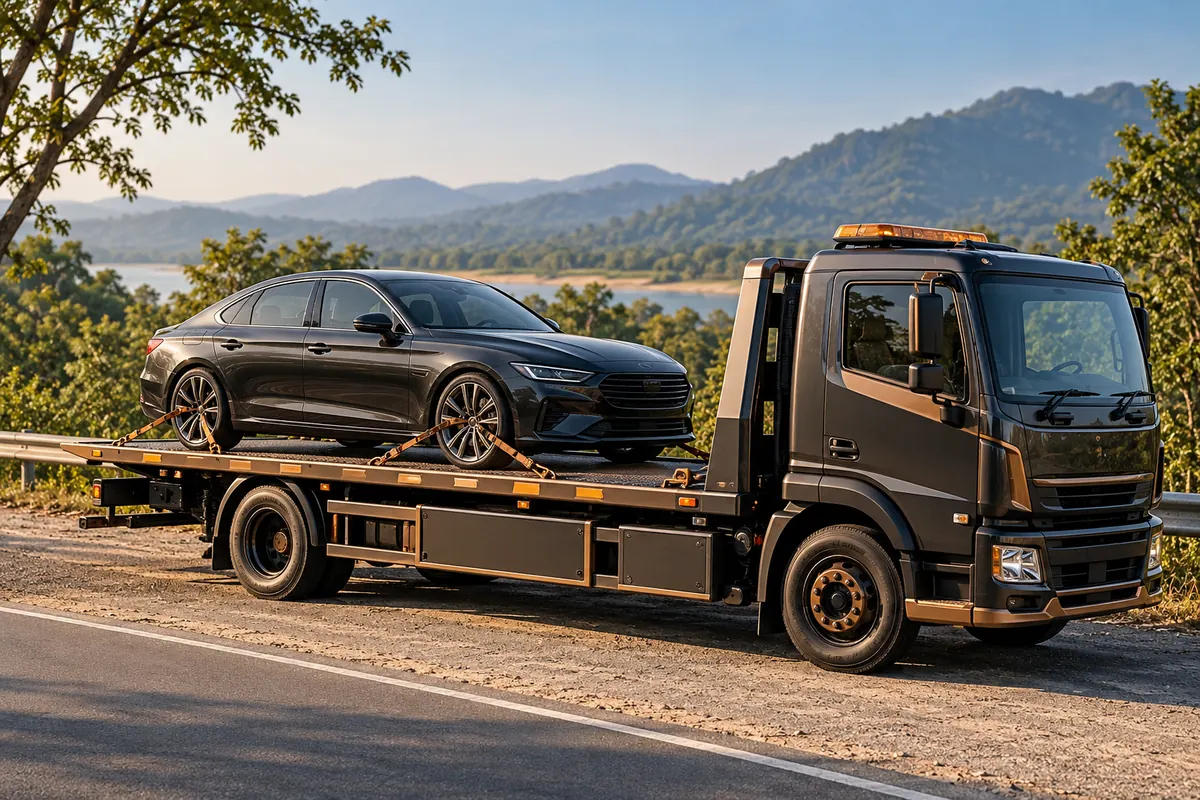
The recovery professional should select a method compatible with the vehicle, damage and access. A flatbed may be appropriate in many situations, but an article cannot determine equipment suitability from a model name alone.
Agree the recovery scope
Ask for the quoted destination, charges, estimated availability and any likely extra handling requirement. Check whether the insurer or roadside assistance provider requires its own authorization before you arrange an independent recovery.
Keep the operator’s contact details and recovery receipt. If safe, retain photographs showing the car’s condition before loading and after delivery. Do not obstruct emergency work to obtain these records.
Separate towing from claim approval
Recovery assistance and insurance settlement are different decisions. Cashless authorization, claim admissibility and final approval depend on the customer’s policy terms, insurer approval, survey findings and applicable network/cashless arrangements.
THE SPARE HEAVEN – Multi-Brand Car Workshop in Guwahati publishes accident repair and recovery information. Use the workshop contact request for non-emergency coordination and confirm current availability directly; do not assume an online form dispatches a truck immediately. Read waterlogging guidance if flood exposure is involved, and the claim assistance overview when planning an insurance repair.
Vehicle-specific reference: Hyundai Exter owner’s manual.
Quick answers
Can I enquire at THE SPARE HEAVEN about accident-vehicle recovery availability?
Use the workshop contact route for non-emergency coordination and confirm current availability directly. An online form does not establish that a truck has been dispatched. The recovery request needs vehicle, location and access information before equipment and the supported arrangements can be considered.
What takes priority over gathering information for THE SPARE HEAVEN’s accident-recovery enquiry?
If there are injuries, fire or immediate danger, contact the appropriate emergency services. Do not enter traffic or approach a hazardous vehicle to obtain quotation photographs. Personal safety and emergency work take priority over supplying a detailed recovery record.
Which pickup-location details should I send for THE SPARE HEAVEN’s accident-recovery enquiry?
Share a map pin where possible, then add a road name, travel direction and visible landmark. Describe the carriageway, lane, slope or private-premises setting and any barrier or low entrance you can report safely. Access restrictions affect recovery planning.
Why should I agree the destination and receiving entrance in THE SPARE HEAVEN’s recovery discussion?
The destination matters alongside the pickup point. Give the operator the intended receiving location and clarify its entrance or arrangements. A workshop name alone may not identify how the vehicle will be received, so that detail belongs in the recovery plan.
Which vehicle-condition details help THE SPARE HEAVEN assess an accident-recovery request?
Provide the make, model and manual, automatic, hybrid or electric configuration. Describe visible wheel damage, whether normal rolling is available, and any unavailable steering or parking brake. Report leakage, water exposure and other visible hazards without touching or experimenting with them.
Should I force controls or improvise an attachment while waiting for accident-recovery advice from THE SPARE HEAVEN?
Do not force the transmission selector, drag a damaged wheel or improvise a towing attachment. Clearly identify hybrid or electric propulsion and stay away from exposed high-voltage components. Give the professional the observed condition so an appropriate method can be considered.
Can the towing method for another car establish the equipment needed in my THE SPARE HEAVEN recovery enquiry?
Recovery restrictions are specific to the vehicle. The professional must select a method compatible with its instructions, damage and access. A flatbed can be appropriate in some situations, but neither a familiar model name nor another car's towing method establishes suitability for this recovery.
What should I confirm in the accident-recovery quotation discussed with THE SPARE HEAVEN?
Confirm the quoted destination, charges, estimated availability and any likely additional handling requirement. Check whether the insurer or roadside-assistance provider requires its own authorisation before you arrange an independent recovery. Agreement on those points should precede assumptions about the booking.
Which records should I retain after an accident recovery coordinated through THE SPARE HEAVEN’s enquiry?
Keep the operator's contact details and recovery receipt. If it is safe, retain photographs of the vehicle before loading and after delivery. Do not obstruct emergency work or put yourself at risk to complete that photographic record.
Does arranging accident recovery with THE SPARE HEAVEN establish insurance or cashless approval?
Recovery assistance and insurance settlement are separate decisions. Policy terms, insurer approval, survey findings and the applicable network or workshop arrangements determine cashless authorisation and claim acceptance. A recovery arrangement should not be read as approval of the later repair claim.