In this guide
After a car has been exposed to waterlogging, “change the oil and try again” is not a safe universal plan. The extent of water entry is unknown until the vehicle is assessed. Oil condition may be relevant to an inspection, but it cannot explain every possible mechanical or electrical effect of flooding.
For drivers in Guwahati and other monsoon-affected parts of Assam, the priority is safe recovery and an accurate account of what happened—not an attempt to prove that the engine still runs.
Keep the engine off
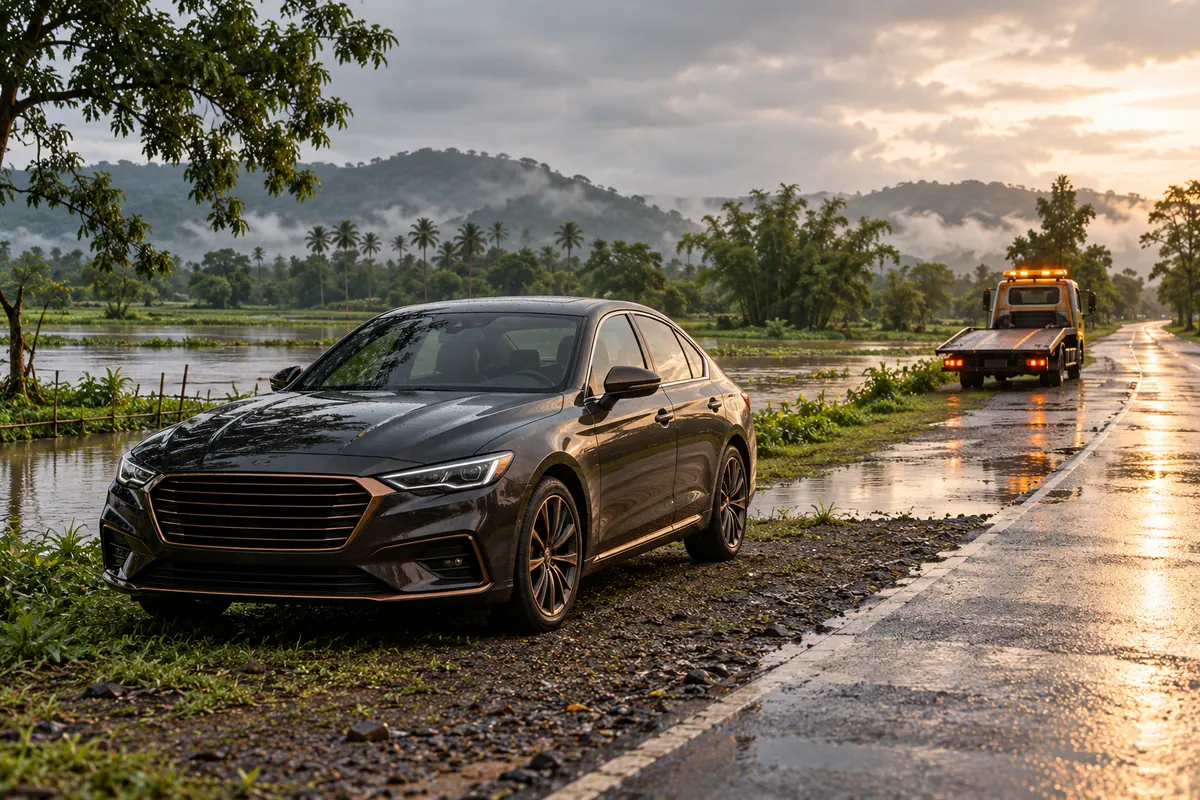
Do not attempt to restart or push-start a vehicle that stopped in water. Tell the recovery operator about the water exposure and the vehicle type. If the scene is dangerous, leave evidence gathering to a safe time and prioritise people over the car. Where it is safe to do so, contact the insurer before recovery to check whether a spot survey is required. Do not delay action needed to protect people.
HDFC ERGO’s published engine-protection add-on wording specifically sets out obligations about not cranking or push-starting after a vehicle has stopped in a waterlogged area. This is an example of why the owner must read the actual policy and report the incident promptly; it is not a promise that every flood-related engine repair is covered.
Make a factual incident record
Write the approximate time, location and sequence of events. Was the car parked, moving or already stopped? Was the engine running when water reached it? Were any starting attempts made afterwards? State the facts honestly, including actions you now realise may have been unwise.
Keep safely obtained photographs, recovery details and the claim reference number. A clear timeline helps explain the case more reliably than edited descriptions designed to sound favourable.
Ask before fluids or parts are discarded
Contact the insurer for its current inspection and documentation instructions. Before approving work that may remove evidence, ask the workshop how the findings will be recorded and whether the insurer requires a survey first.
A professional may need to examine fluid condition and other relevant systems. Do not drain engine oil yourself to check its appearance, and do not assume that normal-looking oil rules out water damage.
Separate assessment from authorisation
Request an inspection summary that distinguishes observations, proposed further checks and recommended repairs. If dismantling is required to understand the damage, agree the scope and charges before it begins.
An estimate may change as findings become available. Ask how additional work will be presented for approval and what evidence will accompany it. Keeping these steps separate makes the customer’s consent clearer.
Read cover conditions, not only the cover name
Flood damage, engine damage and consequential loss are not interchangeable policy descriptions. Whether an own-damage policy or an engine-protection add-on responds depends on the issued wording and circumstances.
Cashless authorization, claim admissibility and final approval depend on the customer’s policy terms, insurer approval, survey findings and applicable network/cashless arrangements.
THE SPARE HEAVEN – Multi-Brand Car Workshop provides waterlogging guidance, engine inspection information and claim assistance details. Use the booking form for workshop coordination and confirm arrangements directly; it is not an emergency dispatch service.
Policy reference example: HDFC ERGO motor add-on wording. Your issued policy takes precedence.
Quick answers
Is changing the oil enough before THE SPARE HEAVEN assesses a waterlogged engine?
After a car has been exposed to waterlogging, “change the oil and try again” is not a safe universal plan. The extent of water entry is unknown until the vehicle is assessed. Oil condition may be relevant to an inspection, but it cannot explain every possible mechanical or electrical effect of flooding.
Should I restart a water-stopped engine before contacting THE SPARE HEAVEN?
Do not attempt to restart or push-start a vehicle that stopped in water. Tell the recovery operator about the water exposure and the vehicle type. If the scene is dangerous, leave evidence gathering to a safe time and prioritise people over the car. Where it is safe to do so, contact the insurer before recovery to check whether a spot survey is required. Do not delay action needed to protect people.
Does the engine-protection example in THE SPARE HEAVEN guidance guarantee flood-repair cover?
HDFC ERGO’s published engine-protection add-on wording specifically sets out obligations about not cranking or push-starting after a vehicle has stopped in a waterlogged area. This is an example of why the owner must read the actual policy and report the incident promptly; it is not a promise that every flood-related engine repair is covered.
What incident sequence should I give THE SPARE HEAVEN after possible oil contamination?
Write the approximate time, location and sequence of events. Was the car parked, moving or already stopped? Was the engine running when water reached it? Were any starting attempts made afterwards? State the facts honestly, including actions you now realise may have been unwise.
Which recovery records should I retain for THE SPARE HEAVEN’s waterlogging assessment?
Keep safely obtained photographs, recovery details and the claim reference number. A clear timeline helps explain the case more reliably than edited descriptions designed to sound favourable.
What should I confirm before THE SPARE HEAVEN drains fluids or discards water-damaged parts?
Contact the insurer for its current inspection and documentation instructions. Before approving work that may remove evidence, ask the workshop how the findings will be recorded and whether the insurer requires a survey first. A professional may need to examine fluid condition and other relevant systems. Do not drain engine oil yourself to check its appearance, and do not assume that normal-looking oil rules out water damage.
What assessment and dismantling scope should I approve at THE SPARE HEAVEN after water exposure?
Request an inspection summary that distinguishes observations, proposed further checks and recommended repairs. If dismantling is required to understand the damage, agree the scope and charges before it begins.
How should THE SPARE HEAVEN seek approval if the water-damage estimate changes?
An estimate may change as findings become available. Ask how additional work will be presented for approval and what evidence will accompany it. Keeping these steps separate makes the customer’s consent clearer.
Which policy distinctions matter for THE SPARE HEAVEN’s flood-related engine claim?
Flood damage, engine damage and consequential loss are not interchangeable policy descriptions. Whether an own-damage policy or an engine-protection add-on responds depends on the issued wording and circumstances. Cashless authorization, claim admissibility and final approval depend on the customer’s policy terms, insurer approval, survey findings and applicable network/cashless arrangements.
Can I enquire with THE SPARE HEAVEN about assessment of oil concerns after waterlogging?
THE SPARE HEAVEN – Multi-Brand Car Workshop provides waterlogging guidance, engine inspection information and claim assistance details. Use the booking form for workshop coordination and confirm arrangements directly; it is not an emergency dispatch service.