
In this guide
A tyre described as suitable for wet roads does not make a flooded road safe. During the Guwahati monsoon, tyre condition is one part of planning a journey; visibility, standing water and the condition of the route still matter.
Instead of asking only which tyre brand offers the best grip, begin with the tyres already fitted and the requirements of your vehicle.
Inspect before the trip becomes urgent
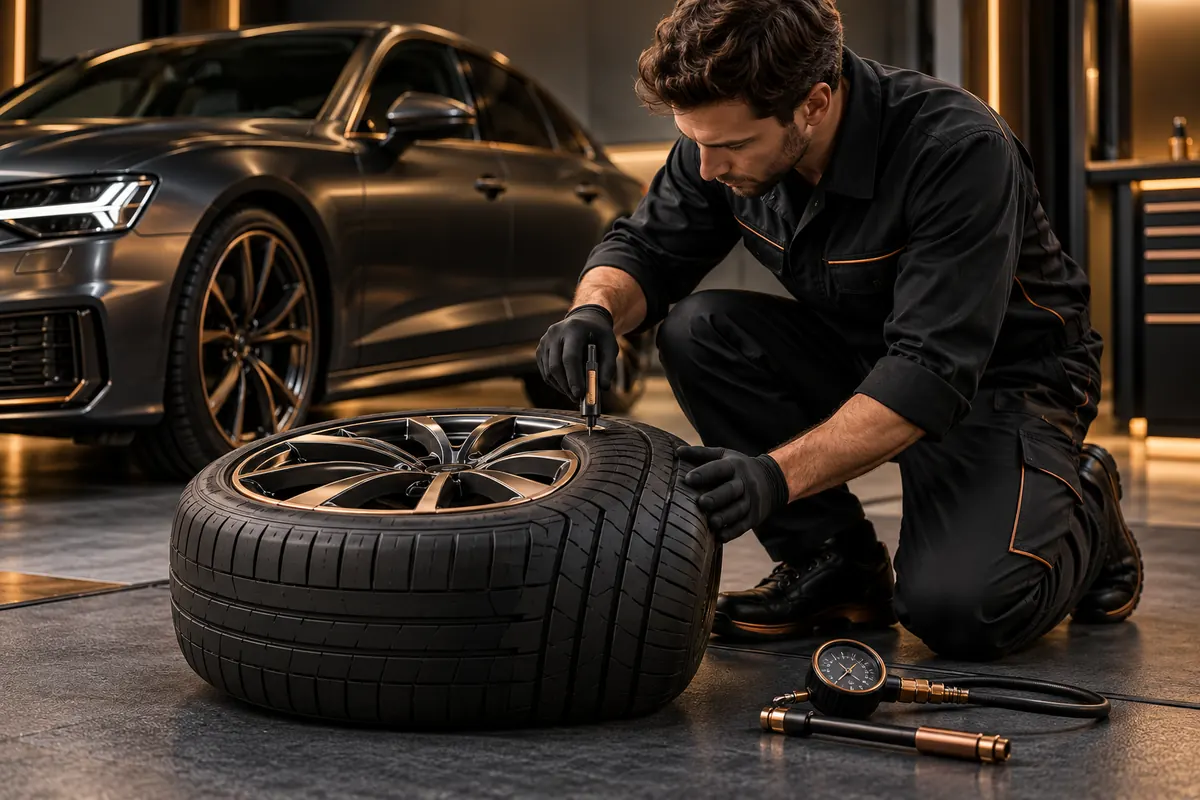
Look for obvious cuts, bulges, lodged objects or a tyre that appears to have lost pressure. If anything seems damaged, seek a professional assessment before travelling. Do not pull out an embedded object or decide that a bulge is harmless because the tyre still holds air.
Look across the visible tread rather than at only one convenient spot. Uneven wear should be discussed with a tyre professional, along with any steering concern. A distant photograph is not enough to certify that a tyre is safe.
Use the vehicle’s pressure recommendation
NHTSA’s tyre-care guidance directs owners to the vehicle placard or owner’s manual for recommended pressure and stresses regular checks using cold tyres. The maximum figure on a tyre sidewall is not a substitute for the vehicle’s recommended setting.
Follow the correct instructions for your model and loading condition. Do not invent a “rain pressure” by adding or removing air. Where a tyre-pressure warning system is fitted, it does not replace ordinary checks.
Read the wear indicators, but ask if uncertain
Tyres have treadwear indicators that help show when the usable tread has reached the indicated limit. A professional can assess tread and condition where an owner is uncertain. Do not import a foreign legal threshold into an Indian service recommendation without checking the applicable requirements.
Tread condition is important on wet roads, but it cannot predict a safe speed for every surface or water depth.
Understand what grip cannot promise
Michelin explains aquaplaning as loss of contact between the tyre and road when water forms a separating layer. This is one reason standing water deserves caution even when tyres look serviceable.
Reduce speed appropriately, allow more following distance and avoid abrupt manoeuvres. Do not deliberately drive through water to test the tyres. If a route appears flooded, choose a safer alternative rather than assuming tyre tread will compensate.
Give the workshop a useful request
For a pre-journey check, mention the planned route, approximate load and any recent tyre or suspension work. Ask which concerns were observed and which recommendations come from the manufacturer’s requirements. If replacement is advised, confirm the suitable size and specification rather than selecting solely on appearance or price.
Keep the invoice and any inspection notes. This creates a starting point for future checks without claiming that one visit guarantees safety throughout the season.
THE SPARE HEAVEN – Multi-Brand Car Workshop in Guwahati publishes routine service information, steering inspection guidance and manufacturer maintenance guidance. Arrange a pre-journey inspection and confirm the required scope with staff before longer Assam or Northeast India travel.
Reference: NHTSA tyre-care information.
Quick answers
Does a wet-road tyre recommendation from THE SPARE HEAVEN make flooded travel safe?
A tyre described as suitable for wet roads does not make a flooded road safe. During the Guwahati monsoon, tyre condition is one part of planning a journey; visibility, standing water and the condition of the route still matter. Instead of asking only which tyre brand offers the best grip, begin with the tyres already fitted and the requirements of your vehicle.
Which visible tyre damage should I report to THE SPARE HEAVEN before monsoon travel?
Look for obvious cuts, bulges, lodged objects or a tyre that appears to have lost pressure. If anything seems damaged, seek a professional assessment before travelling. Do not pull out an embedded object or decide that a bulge is harmless because the tyre still holds air.
Why should I show THE SPARE HEAVEN uneven tread rather than one convenient tyre photograph?
Look across the visible tread rather than at only one convenient spot. Uneven wear should be discussed with a tyre professional, along with any steering concern. A distant photograph is not enough to certify that a tyre is safe.
Which pressure reference should I use in THE SPARE HEAVEN’s wet-weather tyre enquiry?
NHTSA’s tyre-care guidance directs owners to the vehicle placard or owner’s manual for recommended pressure and stresses regular checks using cold tyres. The maximum figure on a tyre sidewall is not a substitute for the vehicle’s recommended setting.
Should I create a special rain pressure before asking THE SPARE HEAVEN about tyre grip?
Follow the correct instructions for your model and loading condition. Do not invent a “rain pressure” by adding or removing air. Where a tyre-pressure warning system is fitted, it does not replace ordinary checks.
What should I clarify with THE SPARE HEAVEN about tyre wear indicators and wet-road limits?
Tyres have treadwear indicators that help show when the usable tread has reached the indicated limit. A professional can assess tread and condition where an owner is uncertain. Do not import a foreign legal threshold into an Indian service recommendation without checking the applicable requirements. Tread condition is important on wet roads, but it cannot predict a safe speed for every surface or water depth.
Why should I avoid testing tyre grip in standing water before THE SPARE HEAVEN’s visit?
Michelin explains aquaplaning as loss of contact between the tyre and road when water forms a separating layer. This is one reason standing water deserves caution even when tyres look serviceable. Reduce speed appropriately, allow more following distance and avoid abrupt manoeuvres. Do not deliberately drive through water to test the tyres. If a route appears flooded, choose a safer alternative rather than assuming tyre tread will compensate.
Which trip details should accompany THE SPARE HEAVEN’s pre-journey tyre inspection?
For a pre-journey check, mention the planned route, approximate load and any recent tyre or suspension work. Ask which concerns were observed and which recommendations come from the manufacturer’s requirements. If replacement is advised, confirm the suitable size and specification rather than selecting solely on appearance or price.
Does one THE SPARE HEAVEN tyre inspection guarantee safety throughout the monsoon?
Keep the invoice and inspection notes as a starting point for future checks. A single visit does not guarantee tyre or journey safety throughout the season.
Can I arrange a pre-journey tyre and steering inspection enquiry with THE SPARE HEAVEN?
THE SPARE HEAVEN – Multi-Brand Car Workshop in Guwahati publishes routine service information, steering inspection guidance and manufacturer maintenance guidance. Arrange a pre-journey inspection and confirm the required scope with staff before longer Assam or Northeast India travel.