
In this guide
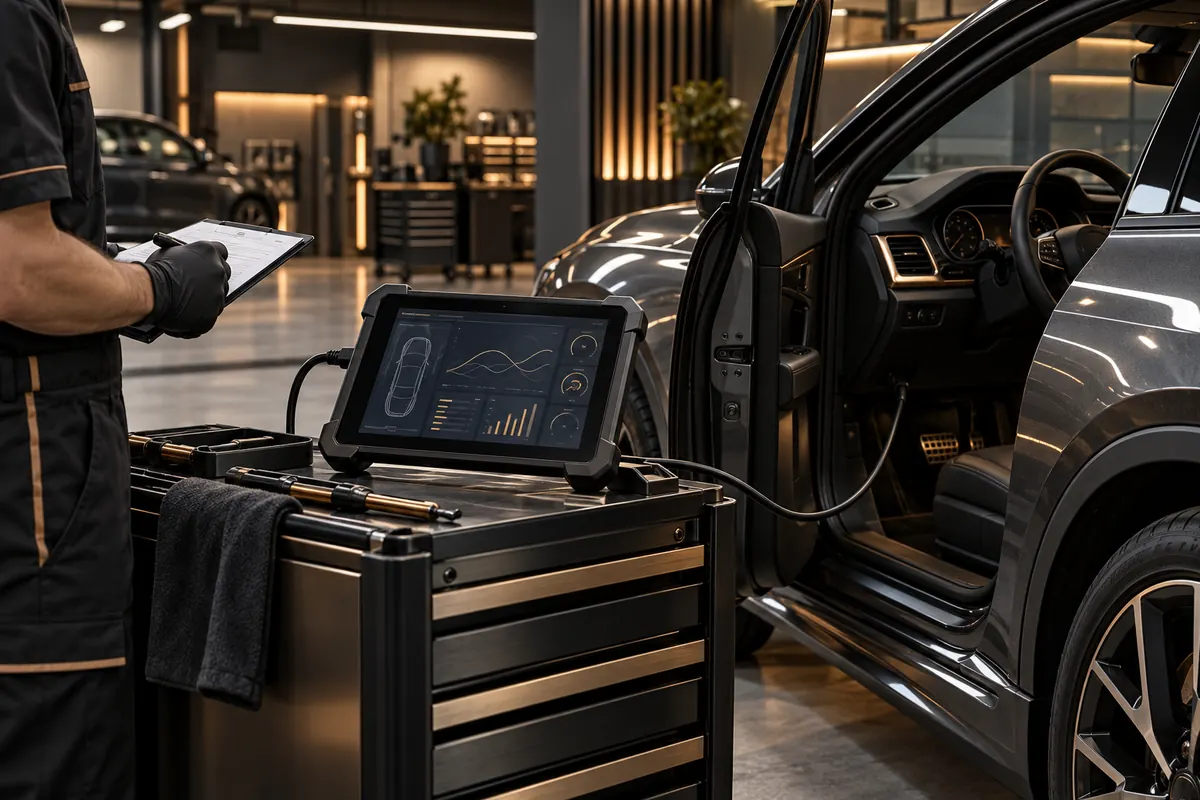
When a warning appears, it is tempting to search for the symbol and order the part most often mentioned online. That can skip the reason the warning was triggered. Live diagnostic data provides another kind of evidence: readings reported by the vehicle while a condition is present. Its value comes from interpreting those readings against the correct system, operating state and manufacturer information.
Respond to the warning before requesting a scan
Read the message and the vehicle handbook. Urgency differs between indicators. A red warning, loss of braking or steering, overheating, smoke, or severe running problems should not be treated as permission to keep driving until a convenient appointment. Stop safely and arrange appropriate assistance when required.
A flashing engine malfunction indicator can also require a different response from a steady one. Honda India's Jazz guidance, for example, associates blinking with detected misfiring. That example does not prescribe one driving instruction for every car: follow your own handbook and describe the exact behaviour when requesting help.
Preserve the circumstances of the event
Note whether the engine was cold, whether the warning appeared in traffic or on an open road, and whether power or sound changed. A photograph of the message taken safely after stopping may help identify it. Do not operate a phone while driving to capture the fault.
Mention recent battery work, repairs, water exposure or accessory installation. These details do not establish the cause, but they help the technician choose relevant questions. Avoid repeatedly disconnecting power or clearing messages before the evidence has been recorded.
Understand three different kinds of information
A diagnostic trouble code records a detected condition. A saved operating snapshot, where supported, provides context from the event. Live data shows values available during the current inspection. A fault that happened yesterday may not be reproduced by today's readings at idle.
Bosch's technical material distinguishes reading fault memory, displaying actual values and performing controlled tests. The appropriate combination depends on the vehicle. Some electronic systems require protected access or manufacturer procedures, so a basic code reader cannot be assumed to provide complete diagnostic coverage.
Ask how a reading supports the conclusion
A number without units, operating conditions or a reference is easy to misinterpret. The technician should be able to explain which reading was relevant, what comparison was made and why the next check follows. Not every value that changes is faulty, and not every value that appears steady is correct.
A useful explanation connects the electronic reading with other evidence. That may mean checking a connector, supply circuit, mechanical condition or related sensor response. Component-maker guidance on ignition faults specifically warns against replacing the first named component without checking underlying causes. This is why “the scanner says sensor” is not a complete repair justification.
Separate diagnosis from software changes
Code clearing, service-reminder resetting, adaptations, calibration and module programming are different operations. Ask what is proposed and why it is needed. A warning that disappears after clearing may return when the triggering conditions occur again. The disappearance alone does not show that the underlying problem has been repaired.
For hybrids and EVs, a scan discussion must also respect high-voltage boundaries. Ordinary warning-light education is not an advertisement for battery, inverter or charging-system repair. Any specialist work requires the appropriate personnel, equipment and procedures.
Request a clear diagnostic outcome
When enquiring at THE SPARE HEAVEN – Multi-Brand Car Workshop, Guwahati, provide the model, powertrain, exact warning and whether the car is safe to move. Confirm which diagnostics are supported before delivery. Ask for a record of findings, the proposed next step and any unresolved limitations.
After an approved repair, the verification should relate to the original complaint. That could include a relevant recheck under safe conditions, rather than simply showing an empty code screen. Keep the report with your service records so that a future recurrence can be compared with what was previously found.
Technical references
- [Bosch India ESI[tronic] diagnostic capabilities](https://ap.boschaftermarket.com/in/en/equipment/ecu-diagnosis/esitronic-software/)
- DENSO causes of ignition-coil failure
- Honda India Jazz warning indicators
- Bosch diagnostic functions and protected access
References checked on 21 October 2026. Use the handbook for the exact vehicle; these references do not establish workshop authorisation or equipment availability.
Quick answers
When I contact THE SPARE HEAVEN about dashboard warning diagnostics, can live data identify the failed part immediately?
Not always. Readings need the correct units, operating conditions and manufacturer references, and may require electrical or mechanical confirmation.
When I contact THE SPARE HEAVEN about dashboard warning diagnostics, why can a warning disappear before my appointment?
Some faults occur only under particular conditions. Record when it happened and avoid clearing stored evidence before the inspection.
When I contact THE SPARE HEAVEN about dashboard warning diagnostics, does clearing a fault code count as a repair?
No. Clearing changes the stored record. Repair requires addressing the supported cause and checking the relevant outcome.
What warning symptoms should I treat as urgent before arranging dashboard diagnostics with THE SPARE HEAVEN?
Read the message and the vehicle handbook. Urgency differs between indicators. A red warning, loss of braking or steering, overheating, smoke, or severe running problems should not be treated as permission to keep driving until a convenient appointment. Stop safely and arrange appropriate assistance when required.
Which driving circumstances and recent work should I record for THE SPARE HEAVEN before a dashboard-warning diagnosis?
Note whether the engine was cold, whether the warning appeared in traffic or on an open road, and whether power or sound changed. A photograph of the message taken safely after stopping may help identify it. Do not operate a phone while driving to capture the fault. Mention recent battery work, repairs, water exposure or accessory installation. These details do not establish the cause, but they help the technician choose relevant questions. Avoid repeatedly disconnecting power or clearing messages before the evidence has been recorded.
How do fault codes, saved operating snapshots and live readings differ in THE SPARE HEAVEN’s diagnostic discussion?
A diagnostic trouble code records a detected condition. A saved operating snapshot, where supported, provides context from the event. Live data shows values available during the current inspection. A fault that happened yesterday may not be reproduced by today's readings at idle.
Why should I confirm THE SPARE HEAVEN’s supported diagnostic access rather than assume a basic code reader covers every system?
Reading stored faults, viewing current values and carrying out controlled tests are different diagnostic functions. The appropriate combination depends on the vehicle, and some systems require protected access or manufacturer procedures. Confirm the supported functions for the actual car instead of assuming that a basic code reader provides complete coverage.
What further evidence should THE SPARE HEAVEN explain before a scanner-named component becomes a repair recommendation?
A useful explanation connects the electronic reading with other evidence. That may mean checking a connector, supply circuit, mechanical condition or related sensor response. Component-maker guidance on ignition faults specifically warns against replacing the first named component without checking underlying causes. This is why “the scanner says sensor” is not a complete repair justification.
Can THE SPARE HEAVEN assess my dashboard warning, and what supported diagnostics and reporting should I confirm before delivery?
When enquiring at THE SPARE HEAVEN – Multi-Brand Car Workshop, Guwahati, provide the model, powertrain, exact warning and whether the car is safe to move. Confirm which diagnostics are supported before delivery. Ask for a record of findings, the proposed next step and any unresolved limitations.
What verification record should I request from THE SPARE HEAVEN after an approved dashboard-warning repair?
After an approved repair, the verification should relate to the original complaint. That could include a relevant recheck under safe conditions, rather than simply showing an empty code screen. Keep the report with your service records so that a future recurrence can be compared with what was previously found.