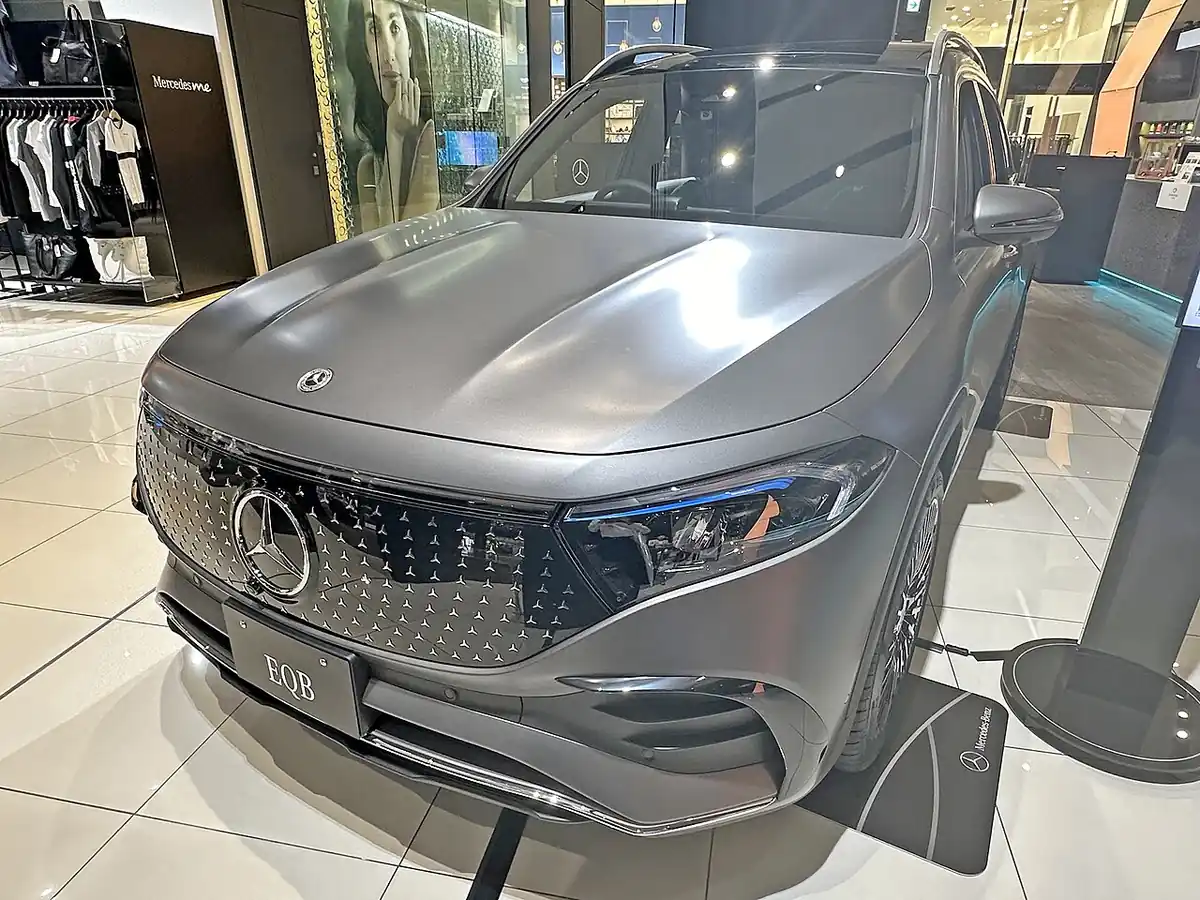
In this guide
Identify the EQB's actual seating and drive equipment
An EQB ownership guide should not assume that every vehicle has the same seating or all-wheel-drive arrangement. Verify the VIN, year, actual version and fitted equipment before planning work. THE SPARE HEAVEN – Multi-Brand Car Workshop, Guwahati records those details with service history and the owner's concern. This is an earlier-owner guide rather than a claim of current India new-car availability based on an old model URL.
Tell the workshop whether a noise or ride concern changes with passengers or luggage, and disclose previous repairs. Safe access, suitable procedures and technical capability determine the accepted scope. Traction-battery, electric-drive, charging-electronics and high-voltage thermal repairs are not advertised as routine local work.
Service update: use the appropriate electric-SUV record
Time, mileage, storage and documented maintenance should be considered against the actual handbook. Tyres, friction brakes, steering, suspension, visibility, cabin filtration and suitable low-voltage checks remain useful ownership topics. A seating or drive difference can matter to fitted components and load-related observations, so do not use another EQB's record as final application proof.
Warranty, recalls, software and manufacturer campaigns require official Mercedes-Benz support using the VIN. Keep local records precise about what was inspected and completed. A general service appointment is not a declaration of manufacturer authorisation, proprietary coding access or completion of every official action. No uniform interval is given for all EQB versions here.
Understand electric propulsion and complaint information
The traction battery supplies energy for driving, while battery-management functions monitor relevant operating conditions. Electric motors produce motion and associated power electronics control their supply. The actual motor and drive arrangement must be verified for the variant. A lower-voltage system supports controls and convenience functions, with conversion and charging components performing different jobs.
An onboard charger is involved with suitable AC charging, but a failed session does not establish that it is defective. Retain the exact message and conditions for appropriate assessment. Battery opening, inverter or motor work, high-voltage isolation and complex thermal procedures need qualified specialist capability or referral. Owner education about these roles does not establish local repair capability.
Inspect ride, tyres and braking under the relevant conditions
Describe when vibration, pull or noise occurs and whether the vehicle was loaded or recently hit a pothole. Verify tyre size, ratings and wheel application before replacement. Suspension springs, dampers, arms, bushes, links and bearings have distinct functions. A knock or changed stance needs supported inspection rather than an undiagnosed assembly list.
Regenerative deceleration recovers some energy, while friction brakes still need condition checks. Pads, discs, calipers, hydraulic parts and relevant warning information should be assessed under the appropriate procedure. A stability warning does not prove that brake pads alone need renewal. Serious wheel, steering or braking concerns may require recovery before any road test, with advanced calibration or restraint functions referred appropriately.
Verify family-SUV body and cabin parts
Doors, glass, rear panels, tailgate fittings, lamps, mirrors, bumper covers and supports should match the actual EQB equipment and generation. Seating-related trim and fittings require the documented layout rather than an assumption that every car has identical rows. Similar styling to another Mercedes SUV is not enough to establish component compatibility.
Cabin airflow, filter condition, wipers and suitable low-voltage lighting concerns can be considered within confirmed scope. Electric AC or thermal work may involve high voltage and need specialist procedures. Identify cosmetic parts separately from brackets, sensors and safety-related equipment. Availability, compatibility, price and delivery timing are confirmed through vehicle identification and supplier checks; calibration or structural requirements need qualified capability or referral.
Arrange a supported travel check or accident enquiry
Before a longer family journey from Guwahati, address known tyre, brake, lighting and visibility concerns. Record water exposure, underbody contact and previous accident work before routine movement or lifting is assumed appropriate. For charging issues, share the location, session type and exact message without attempting connector probing or isolation. Qualified EV advice may determine recovery or referral.
Use the EQB accident guide when the enquiry concerns a damaged closure, wheel area or another collision finding; keep routine family-travel maintenance in the service record separately. THE SPARE HEAVEN can discuss applicable repair documentation in Guwahati after identifying the real variant and equipment. The policy issuer must confirm claim approval, survey requirements and specific workshop cashless eligibility. Customer deductions or non-covered work are explained before authorization, and the booking, phone and WhatsApp links support the planned visit.
Official insurer claim channels
Mercedes-Benz policy evidence and official claim channels: a general motor policy or an EV product page does not prove acceptance of this premium vehicle, approved parts, battery cover or THE SPARE HEAVEN cashless eligibility. Confirm registration, declared use, insured value and repair scope with the insurer.
Choose your insurer’s official claim-intimation link. Submit policy and identity information directly through the insurer’s approved channel. Your insurer decides whether to authorise cashless repairs after assessing your claim against your policy.
Quick answers
Should THE SPARE HEAVEN assume every EQB has identical seating and all-wheel drive?
No. Verify the actual version, seating layout and drive equipment from the VIN and vehicle documents before planning parts or work.
Why should I tell THE SPARE HEAVEN about passengers and luggage when describing an EQB ride concern?
The conditions help guide a supported inspection of tyres, chassis and fitted equipment. They do not establish a failed component by themselves.
Does an EQB charging interruption prove to THE SPARE HEAVEN that the vehicle's charger is defective?
No. Retain the session and warning details so the facility, vehicle and relevant conditions can be assessed appropriately.
What should guide THE SPARE HEAVEN's routine EQB inspection priorities beyond another owner's service record?
Time, mileage, storage and documented maintenance should be considered against the actual handbook. Tyres, friction brakes, steering, suspension, visibility, cabin filtration and suitable low-voltage checks remain useful ownership topics. A seating or drive difference can matter to fitted components and load-related observations, so do not use another EQB's record as final application proof.
What load and road-impact observations help THE SPARE HEAVEN investigate an EQB knock or changed stance?
Describe when vibration, pull or noise occurs and whether the vehicle was loaded or recently hit a pothole. Verify tyre size, ratings and wheel application before replacement. Suspension springs, dampers, arms, bushes, links and bearings have distinct functions. A knock or changed stance needs supported inspection rather than an undiagnosed assembly list.
How should I distinguish EQB local inspection records from manufacturer actions when dealing with THE SPARE HEAVEN?
Keep a record of what was inspected and completed, then check warranty, recalls, software and campaigns with official Mercedes-Benz support using the VIN. A general service appointment does not establish proprietary coding access or completion of every official action for that EQB.
What should THE SPARE HEAVEN clarify before accepting an EQB enquiry that may involve charging hardware?
Retain the failed session's exact message and conditions before assigning a component. An onboard charger has an AC-charging role, but the interruption does not prove it failed. Battery, inverter, motor, isolation and complex thermal procedures require qualified specialist capability or referral, separately from an ordinary inspection.
How should THE SPARE HEAVEN match EQB seating-related trim and rear-body fittings?
Use the documented seating layout, actual equipment and generation to identify cabin fittings, tailgate parts, glass and other rear-body components. Another EQB or Mercedes SUV may look similar without supplying the correct application. The number of seating rows should never be inferred from the model name alone.
What should THE SPARE HEAVEN confirm before an EQB cabin-airflow enquiry expands into thermal repairs?
Cabin filters, airflow, wipers and suitable low-voltage lighting checks can be discussed within the accepted scope. Electric AC or thermal work may involve high voltage and specialist procedures. Ask which tasks are supported and which require referral before parts, calibration or structural work enters the quotation.
Can THE SPARE HEAVEN consider a service enquiry for my EQB with load-related ride symptoms?
Describe how the concern changes with passengers or luggage and disclose previous repairs. THE SPARE HEAVEN confirms safe access, suitable procedures and technical capability before acceptance. Traction-battery, electric-drive, charging-electronics and high-voltage thermal repairs are outside what this guide advertises as routine local work.
Vehicle and claim reference information
Use the manual for your exact vehicle and the issued insurance policy. These sources provide background and do not establish a workshop authorization or insurer tie-up.