In this guide
Collecting a car after accident repair should include time to understand what was done and whether any follow-up remains. A clean finish is welcome, but paint appearance alone cannot answer questions about restraints, steering, cooling or electronic safety equipment. Arrange a handover conversation rather than treating collection as only a payment step.
If you are bringing a previously repaired vehicle to THE SPARE HEAVEN for a second opinion, use the same approach. Share the original incident, the earlier estimate and the specific concern. The new inspection should investigate an observable problem, not assume that every previous repair was defective.
Compare the completed work with the agreed scope
Ask for the final repair description and compare it with the latest authorised estimate. Identify parts replaced, areas repaired and panels refinished. If an operation was changed or omitted, request an explanation. A lower or higher invoice total is not enough to show what happened.
Keep supplementary estimates with the first estimate. Hidden damage can alter the job, but the record should explain when it was found and how the extra work was authorised. Separate any maintenance you requested during the visit from the accident repair so the service history remains clear.
Inspect the affected area together
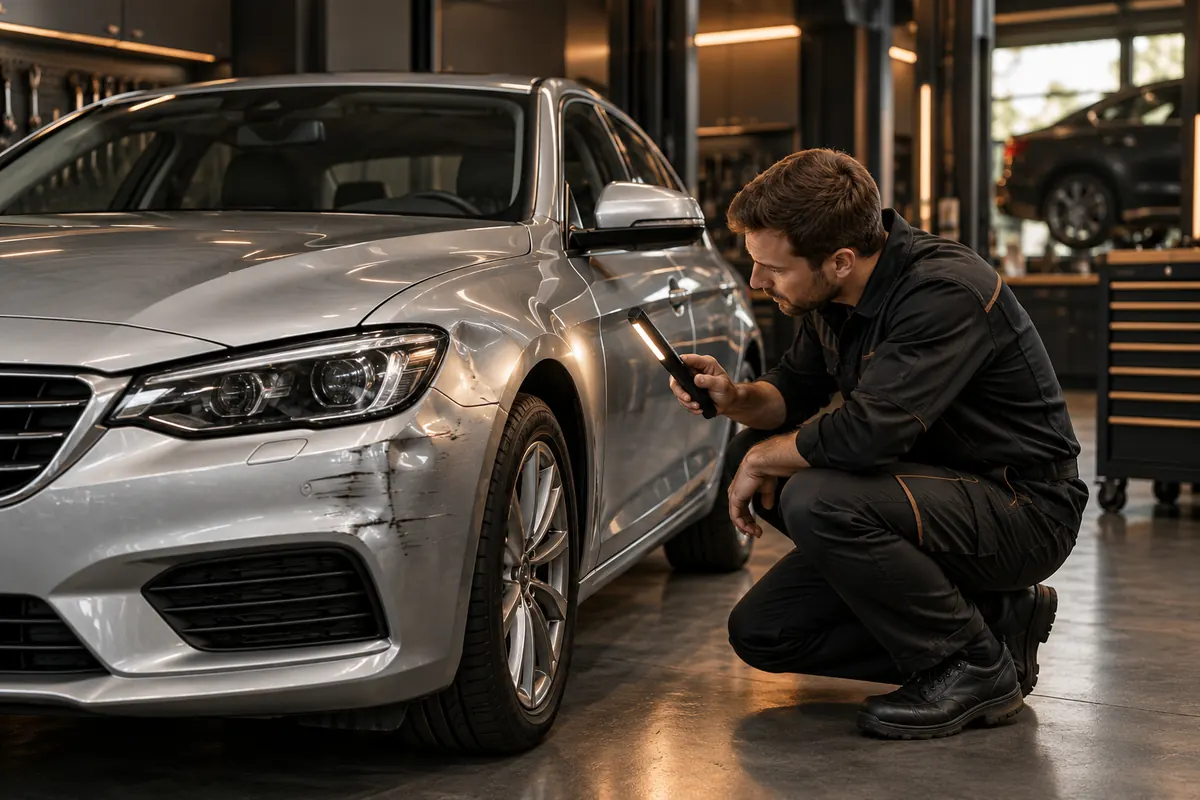
Review visible panel fit, secure attachment, glass and lighting with the workshop. Open and close the relevant door, bonnet or tailgate under guidance. Ask about any remaining adjustment or finishing work rather than discovering it after leaving in a hurry.
Check the area in suitable light and distinguish a concern about finish from one about function. A cosmetic mark and a loose attachment need different responses. Record the concern precisely, with the agreed next action, so a later visit is based on the same understanding.
Ask about safety-system requirements
If the impact involved airbags, seat belts, structural areas, steering or suspension, ask what assessment and repair procedures were required. Do not assume that clearing a warning message is equivalent to completing a repair. Manufacturer instructions can require component replacement, specialist checks or restrictions on vehicle movement after a collision.
Volvo's safety guidance illustrates why vehicle-specific instructions matter: certain collisions can place a car in a safety mode requiring professional assessment. Other makes and generations use different systems. Ask about the procedure for your vehicle, rather than applying one model's recovery or reset instructions to another.
Review camera, radar and glass work
Where fitted, cameras and radar can be affected by work around bumpers, windshields or mounting points. Ask whether the actual repair required calibration or another verification procedure and who completed it. The presence of a driver-assistance feature does not establish that the workshop has the equipment to calibrate it.
A car can have no obvious visual damage around a sensor while its mounting or surrounding repair still needs attention. Report any new assistance-system warning or unusual behaviour. Do not deliberately test emergency braking or collision-avoidance functions on public roads to reassure yourself.
Clarify the road-test and follow-up record
Ask what functional checks were appropriate after the repair and whether any issue remains unresolved. A safe test must be suitable for the vehicle's condition; a road test is not appropriate merely because the owner wants to try a car with a known safety fault.
If further work is necessary, obtain a clear description and decide with the workshop whether the vehicle should remain there or be recovered elsewhere. For an electrified vehicle with suspected battery or high-voltage damage, routine body-work completion should not be presented as specialist electrical clearance.
Reconcile payment and keep the documents
Review the final customer contribution separately from repair quality. Cashless processing does not mean every charge is covered, and paying a deductible does not certify that every repair is satisfactory. Ask the insurer or workshop to explain the relevant financial line without confusing it with a technical handover decision.
THE SPARE HEAVEN – Multi-Brand Car Workshop, Guwahati can discuss accident inspection, supported repairs and claim assistance through active cashless facilities. Each claim requires policy coverage and insurer approval. Keep the job card, invoice, relevant diagnostic or calibration records and written follow-up advice. If a new concern appears after collection, report when it started and the conditions in which it occurs; stop using the vehicle if it cannot be operated safely.
Quick answers
Can I treat a good paint finish as proof that THE SPARE HEAVEN’s accident repair is complete?
No. Finish, attachment, mechanical condition and safety-system work are different checks. Review the completed scope and any required functional records.
Should I test emergency braking myself to check an accident repair discussed with THE SPARE HEAVEN?
Do not create a collision risk to test it on the road. Ask for the manufacturer-prescribed inspection or calibration evidence where required.
What post-accident repair records should I retain after collecting the car from THE SPARE HEAVEN?
Keep the final estimate, job card, invoice, insurer decision and any relevant diagnostic, calibration or follow-up records.
How should I compare THE SPARE HEAVEN’s completed accident work with the latest authorised estimate?
Ask for the final repair description and compare it with the latest authorised estimate. Identify parts replaced, areas repaired and panels refinished. If an operation was changed or omitted, request an explanation. A lower or higher invoice total is not enough to show what happened.
Which repaired openings and attachments should I review with THE SPARE HEAVEN at accident-repair handover?
Review visible panel fit, secure attachment, glass and lighting with the workshop. Open and close the relevant door, bonnet or tailgate under guidance. Ask about any remaining adjustment or finishing work rather than discovering it after leaving in a hurry.
What safety-system evidence should I request from THE SPARE HEAVEN after an accident repair?
If the impact involved airbags, seat belts, structural areas, steering or suspension, ask what assessment and repair procedures were required. Do not assume that clearing a warning message is equivalent to completing a repair. Manufacturer instructions can require component replacement, specialist checks or restrictions on vehicle movement after a collision.
What should THE SPARE HEAVEN explain about camera or radar verification after glass or bumper work?
Where fitted, cameras and radar can be affected by work around bumpers, windshields or mounting points. Ask whether the actual repair required calibration or another verification procedure and who completed it. The presence of a driver-assistance feature does not establish that the workshop has the equipment to calibrate it.
How should THE SPARE HEAVEN document unresolved safety issues before a post-repair road test?
Ask what functional checks were appropriate after the repair and whether any issue remains unresolved. A safe test must be suitable for the vehicle's condition; a road test is not appropriate merely because the owner wants to try a car with a known safety fault. If further work is necessary, obtain a clear description and decide with the workshop whether the vehicle should remain there or be recovered elsewhere. For an electrified vehicle with suspected battery or high-voltage damage, routine body-work completion should not be presented as specialist electrical clearance.
How can THE SPARE HEAVEN assess a specific concern about a previous accident repair without presuming all work was defective?
If you are bringing a previously repaired vehicle to THE SPARE HEAVEN for a second opinion, use the same approach. Share the original incident, the earlier estimate and the specific concern. The new inspection should investigate an observable problem, not assume that every previous repair was defective.
Can THE SPARE HEAVEN discuss post-accident inspection and supported follow-up for a concern noticed after collection?
THE SPARE HEAVEN, a multi-brand workshop in Guwahati, can discuss accident inspection, supported repairs and claim assistance with cashless eligibility subject to verification by the insurer and workshop. Keep the job card, invoice, relevant diagnostic or calibration records and written follow-up advice. If a new concern appears after collection, report when it started and the conditions in which it occurs; stop using the vehicle if it cannot be operated safely.