
In this guide
A car that stops in standing water should not be restarted simply to find out whether it is all right. Water reaching the intake can create an engine-damage risk, and the visible water level outside the car does not reveal everything that happened inside. Maruti Suzuki's flood guidance specifically advises owners not to start a submerged vehicle.
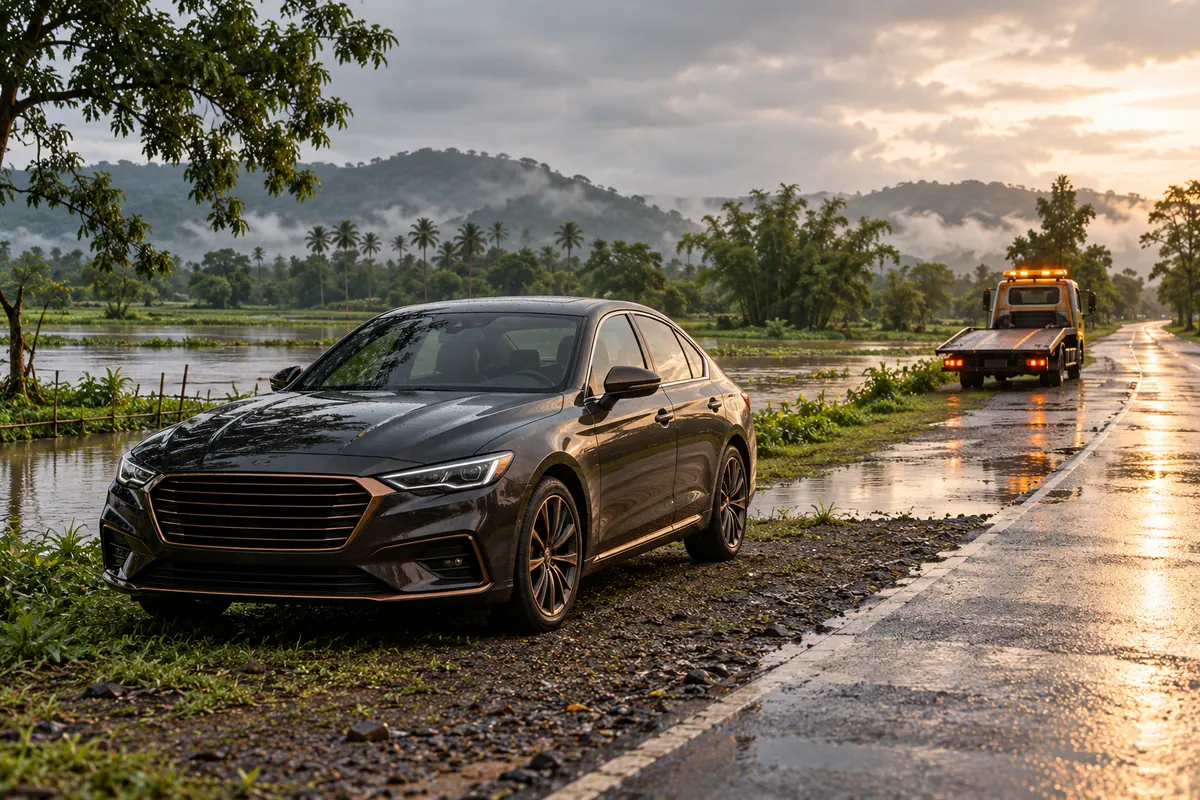
During heavy rain in Guwahati, the safest next step may be to leave the vehicle where it is and obtain help, provided the location itself is safe. Do not enter moving or deep water to inspect it. Tell the recovery provider and insurer that the vehicle has been exposed to water before anyone attempts to move or start it.
Why the intake matters
A combustion engine draws air through an intake system. Water in that path is different from ordinary damp weather or rain on the bodywork. The concern is not solved by replacing a wet filter and assuming that the rest of the engine is unaffected.
The relevant questions include where water reached, whether the engine was running, whether it stopped abruptly and whether anyone attempted to restart it. The workshop needs that history before deciding the assessment sequence. Report repeated starting attempts honestly; they are technical facts, not details to remove from the claim account.
Record observations without dismantling the car
From a safe position, note the time, location and whether the vehicle was moving or parked. Record visible water marks and any warning messages that were already displayed. Do not switch systems on merely to create a photograph or video. Preserve any images taken before the car was recovered.
Tell the workshop if water entered the cabin or if an electrical smell, smoke or unusual heat was noticed. Do not reach into damaged wiring or attempt battery disconnection without appropriate competence. A flooded hybrid or electric vehicle requires procedures suitable for its electrical architecture; it should not be treated as a conventional engine-only problem.
Arrange an assessment rather than a trial start
Ask the recovery operator to use the method specified for the vehicle's transmission and drivetrain. Contact the insurer promptly for survey and recovery instructions, while prioritising personal safety and emergency directions. If the car must be moved because it creates a danger, record the circumstances and inform the insurer.
At intake, ask for the water-exposure history to appear on the job card. A staged estimate can separate the initial assessment from any later dismantling or replacement decision. That is more useful than approving an engine overhaul before the condition has been established.
Understand what the workshop is trying to establish
The assessment needs to determine whether water entered relevant systems and what damage, if any, resulted. Air-path condition, signs of contamination and the reported stoppage may guide the next diagnostic steps. The exact checks depend on the model, engine and manufacturer procedure; there is no universal owner-performed restart test.
A normal-looking exterior or a dry cabin does not establish that the intake is safe. Equally, a damp filter alone does not justify declaring every internal engine component damaged. Ask what evidence supports each proposed repair and whether further inspection is necessary to reach a reliable conclusion.
Keep insurance questions specific
Flood damage and consequential engine damage are not interchangeable coverage descriptions. Check the own-damage cover and any relevant engine-protection add-on. HDFC ERGO's engine and gearbox add-on wording includes specific evidence and owner obligations, including avoiding cranking after the vehicle has stopped in water. Your own policy wording controls your claim.
Do not assume zero-depreciation cover provides engine protection. Submit the incident facts and assessment through the insurer's process, and keep customer-approved diagnostic charges separate from later approved repairs. Never add an invented collision or change the water-exposure account to seek coverage.
Discuss the next step in Guwahati
THE SPARE HEAVEN – Multi-Brand Car Workshop, Guwahati can discuss the vehicle condition, recovery information and appropriate inspection or specialist referral. Confirm the accepted scope before transport, particularly for electrified vehicles or suspected internal engine damage.
Send the model, fuel type, approximate exposure, whether the engine stopped and whether it has been restarted. Those details are more useful than asking for a fixed flood-repair price. Keep the vehicle out of service until the relevant assessment establishes what is required for a safe return.
Quick answers
Should I restart a water-exposed car before contacting THE SPARE HEAVEN when the water level has fallen?
Do not use a restart as a test after suspected intake water entry or submersion. Arrange recovery and an appropriate assessment first.
Does a dry cabin prove to THE SPARE HEAVEN that the intake and engine escaped water damage?
No. Cabin condition alone does not establish the condition of the air intake, engine or other exposed systems.
Does zero-depreciation cover pay for intake-water engine damage assessed by THE SPARE HEAVEN?
It does not establish engine-damage cover. Check the relevant own-damage and engine-protection wording and obtain the insurer’s assessment.
Which water-exposure observations should I preserve for THE SPARE HEAVEN without switching the car on?
From a safe position, note the time, location and whether the vehicle was moving or parked. Record visible water marks and any warning messages that were already displayed. Do not switch systems on merely to create a photograph or video. Preserve any images taken before the car was recovered.
What recovery and insurer instructions should I arrange before THE SPARE HEAVEN assesses suspected intake water?
Ask the recovery operator to use the method specified for the vehicle's transmission and drivetrain. Contact the insurer promptly for survey and recovery instructions, while prioritising personal safety and emergency directions. If the car must be moved because it creates a danger, record the circumstances and inform the insurer.
What evidence should THE SPARE HEAVEN establish before deciding whether intake water caused engine damage?
The assessment needs to determine whether water entered relevant systems and what damage, if any, resulted. Air-path condition, signs of contamination and the reported stoppage may guide the next diagnostic steps. The exact checks depend on the model, engine and manufacturer procedure; there is no universal owner-performed restart test. A normal-looking exterior or a dry cabin does not establish that the intake is safe. Equally, a damp filter alone does not justify declaring every internal engine component damaged. Ask what evidence supports each proposed repair and whether further inspection is necessary to reach a reliable conclusion.
How should THE SPARE HEAVEN’s water-exposure estimate distinguish diagnostic consent from possible engine-protection cover?
Flood damage and consequential engine damage are not interchangeable coverage descriptions. Check the own-damage cover and any relevant engine-protection add-on. HDFC ERGO's engine and gearbox add-on wording includes specific evidence and owner obligations, including avoiding cranking after the vehicle has stopped in water. Your own policy wording controls your claim. Do not assume zero-depreciation cover provides engine protection. Submit the incident facts and assessment through the insurer's process, and keep customer-approved diagnostic charges separate from later approved repairs. Never add an invented collision or change the water-exposure account to seek coverage.
Can THE SPARE HEAVEN discuss inspection or specialist referral after suspected water entered the air intake?
THE SPARE HEAVEN, a multi-brand workshop in Guwahati, can discuss the vehicle condition, recovery information and appropriate inspection or specialist referral. Confirm the accepted scope before transport, particularly for electrified vehicles or suspected internal engine damage.
What engine-running, stoppage and restart history should I disclose to THE SPARE HEAVEN after water exposure?
The relevant questions include where water reached, whether the engine was running, whether it stopped abruptly and whether anyone attempted to restart it. The workshop needs that history before deciding the assessment sequence. Report repeated starting attempts honestly; they are technical facts, not details to remove from the claim account.
How should THE SPARE HEAVEN record intake-water exposure and stage the estimate before an overhaul decision?
At intake, ask for the water-exposure history to appear on the job card. A staged estimate can separate the initial assessment from any later dismantling or replacement decision. That is more useful than approving an engine overhaul before the condition has been established.